International
 913
913
 0
0
 0
0
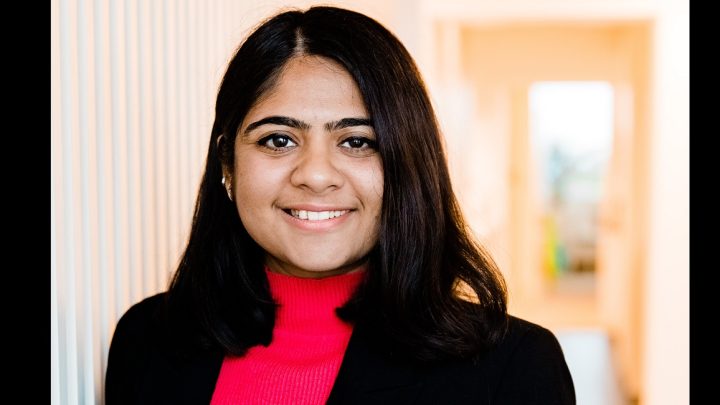
“Intellectual Property and Technology Law don’t exist in isolation; they constantly evolve with developments in innovation, economics, and ethics.” – Anushka Sachdev, Technology, Privacy and Data protection Lawyer at Timelex, Belgium.
This interview was taken by Anshi Mudgal
Posted on October 30, 2025

This interview has been published by Anshi Mudgal and The SuperLawyer Team
Was law always your calling, or did your inclination toward it develop over time? How did NLU Delhi shape this perspective?
I’ve always been drawn to problem-solving and the interplay between logic, language, and human behaviour. Law became my chosen path when I realised how deeply it shapes innovation, access, and justice in society. My inclination toward it certainly matured over time, especially during my years at National Law University, Delhi, which provided a rich interdisciplinary environment. My fellowships and research at the Centre for Innovation, Intellectual Property and Competition (CIIPC), Centre for Communication Governance (CCG) and seminar courses on Copyright, Technology law allowed me to explore privacy and digital technology law issues at a time when India was reimagining its digital landscape. Those experiences confirmed that my calling lay in technology and intellectual property law, where law meets innovation and ethics.
How did you pursue your Master’s at MIPLC and how would you contrast it with the Indian legal education system?

Pursuing an LL.M. at the Munich Intellectual Property Law Center (MIPLC) was both an academic and personal milestone. The admission process was highly competitive, involving a strong academic record, professional experience, motivation statement, and recommendations. What drew me to MIPLC was its small class size and its unique structure that provided a comparative perspective on both U.S. and European Union (EU) laws, reflecting the program’s international orientation. By engaging with both systems side by side, the curriculum encourages students to develop a comparative analytical mindset, preparing them to navigate transnational IP, technology and competition issues effectively. It offers an intense, research-driven curriculum jointly administered by the Max Planck Institute, University of Augsburg, Technical University of Munich, and George Washington University Law School. The experience was transformative- MIPLC’s international cohort fostered rigorous dialogue and cross-cultural exchange.
What drew you to specialize in Intellectual Property and Technology law, and how do you see this area evolving?
My interest in IP and technology law grew organically during my undergraduate years, when I encountered the ethical and regulatory challenges that accompany innovation. During my LL.M. at the Munich Intellectual Property Law Center (MIPLC), I began exploring how IP interacts with emerging technologies such as artificial intelligence, data-driven innovation, and digital platforms. My master thesis on “Challenges in accessing data for AI training and solutions” sparked a deep interest in the legal frameworks governing data, algorithms, and innovation.
This experience broadened my focus from traditional IP concepts like copyright and trademarks to the broader ecosystem of data protection, AI governance, and digital regulation. Upon returning to practice, I realized that the core principles of IP i.e. balancing innovation and access also underpin technology and data law. Working in Brussels further reinforced this transition, as I began advising on GDPR, EU AI Act, DSA, and Data Act issues. Today, I view technology law as an extension of my IP foundation where innovation meets accountability, and creativity meets compliance.
Having worked across data protection, AI governance, and IP transactions, I’ve seen how these fields are converging. The coming years will see the EU AI Act, Data Act, and similar frameworks globally setting new precedents for accountability and fairness in innovation. Digital Personal Data Protection Act (DPDPA), 2023 aligns India’s privacy regime more closely with global standards like the GDPR while maintaining a strong focus on digital sovereignty. Alongside it, the proposed Digital India Act aims to modernize India’s tech regulation framework by replacing the two-decade-old IT Act, addressing emerging issues such as AI governance, platform accountability, and online safety in the evolving digital economy.
What were the most valuable learnings from working with top-tier Indian firms early in your career?
At Luthra & Luthra, I had the opportunity to work on a diverse range of matters from pharmaceutical and IP litigation to entertainment/media law. These formative years taught me the importance of precision and adaptability. I learned to approach complex regulatory issues strategically by balancing legal compliance with commercial pragmatism.
A particularly impactful experience was challenging a government notification before the Indian Supreme Court, where I saw firsthand how constitutional principles intersect with regulatory frameworks. Another was before the Bombay High Court when I delved into the complex interplay of rights of copyright owners, authors and copyright societies from Indian as well as international perspectives, specifically in respect of musical works and associated literary works included in a cinematograph film/sound recording. These experiences built a strong foundation in analytical thinking and advocacy, which continues to shape my approach today.
What motivated you to pursue an international career, and how did you navigate the transition between systems and cultures?
An international career was both an aspiration and a natural progression of my academic and professional interests. Technology law is inherently global as data, AI, and digital technology transcends borders. My LL.M. in Germany exposed me to European frameworks like GDPR, EU Copyright law etc. which complemented my Indian experience and opened the path to working in Brussels.
The transition came with challenges and navigating different legal systems, cultures, and languages required adaptability and openness. But it also offered invaluable perspective. Working across jurisdictions has deepened my understanding of comparative legal systems and helped me develop a nuanced, culturally sensitive advisory style. The key was staying curious, proactive, and empathetic.
How do you apply your experience at Timelex, particularly in EU projects on e-health, privacy, and robotics?
At Timelex, my work involves drafting data processing, data sharing, licensing and material transfer agreements, and advising clients on data protection, data governance, artificial intelligence (AI) and other technology laws. It also involves conducting Data Protection Impact Assessments (DPIAs), interpreting evolving instruments like the EU AI Act and other Data laws. I also advise on European Commission projects in areas such as e-health, privacy, and AI, ensuring that innovation aligns with ethical and legal standards. This inter alia involves collaborating with multidisciplinary teams of researchers, engineers, and policymakers.
My prior experience at Pierstone and Indian firms allows me to bring a comparative, practical lens understanding not only how regulation operates in theory but also how it can be implemented effectively across complex ecosystems. The intersection of AI, data, and health law is particularly exciting as it represents the future of responsible innovation.
What advice would you offer to aspiring IP and technology law professionals?
My first piece of advice would be to embrace the intersectionality of this field. Intellectual Property and Technology Law don’t exist in isolation; they constantly evolve with developments in innovation, economics, and ethics. To truly excel, it’s important to cultivate not only legal expertise but also an understanding of how technology works, why businesses innovate, and what drives policymaking. Reading beyond the law, especially in areas like data science, policy, and philosophy, helps you see the bigger picture.
I’d also recommend engaging with practical experiences early: intern with technology firms, policy think tanks, or tech companies to understand how law operates on the ground. Writing and publishing are equally valuable as they force you to clarify your thinking and build visibility in the field.
To stay updated, I find resources like the European Data Protection Board (EDPB), WIPO Magazine, and Max Planck Institute’s IP & Innovation reports incredibly insightful. Subscribing to newsletters such as Euractiv’s Digital Brief, or IAPP’s Daily Dashboard can also help keep you ahead of regulatory changes.
How do you maintain work–life balance and manage mental health in a demanding field?
For me, work-life balance is about creating intentional pauses. Law can be all-consuming, especially in high-stakes, intellectually demanding areas like technology regulation. Balance begins with discipline and self-awareness. I make it a point to structure my day, prioritize deep work, and set realistic goals instead of trying to do everything at once. I also ensure I take time to disconnect-reading, travelling, hiking, social dancing or simply spending time outdoors helps me reset and gain perspective..
My background in classical dance has been especially grounding. Dance instilled in me mindfulness, rhythm, and patience, all of which translate beautifully into professional life. It reminds me that growth is a gradual, continuous process rather than a race.
Maintaining a structured routine, regular exercise, and mindfulness practices has been crucial. I also believe in fostering open conversations around mental health within the profession. Law can be high-pressure, but acknowledging that and creating supportive networks whether through mentorship or peer discussions makes a huge difference.
Get in touch with Anushka Sachdev –








No comments yet
Be the first to share your thoughts about this interview.